Friday, 30 September 2016

Identity Crisis

Having endured the 10 hour flight to Vancouver followed by the diversion on the route over Whistler to Williams Lake and then the long drive west to down the infamous "Hill" (which really isn't anywhere near as scary as folk would have you believe even though it has its own Wikipedia page), we finally arrived at our first destination - Bella Coola.  This is a place we visited five years back to photograph Grizzlies and we have returned for more of the same as they gather along the river to feast on spawning salmon.

There is a bear viewing platform in the valley, manned by a couple of rangers where Grizzlies can be safely viewed.  On arrival, a large male Grizzly was present in the river but never came close enough to warrant photographing, instead staying on the shaded side of the river, tucking into a few salmon. While we were there another photographer told us of a Moose further down the valley that had joined a group of cows in a field.  As Moose are something of a bogey species for us having missed them in Canada last time and only seen them briefly and in poor light in Estonia, this was too good an opportunity to miss.  Sure enough, as we drove down the road where another couple were already watching the field, there was the bull Moose with the dairy herd, which didn't quite know what to make of their companion that clearly thought he was a cow!


After checking in at the Bella Coola Mountain Lodge, we headed back out in the evening and as we drove around a back road over a small river, a small group of locals beckoned us to stop and look.  Sure enough, in the river was a female Grizzly with two quite big cubs, feeding completely unbothered by their appreciative admirers, though the light wasn't the greatest in some parts of the river.


On the way back to the Lodge we went back to the Moose which was feeding much closer to  the road.


Saturday, 6 February 2016

Orangutan-tastic

After twelve hours of flights to Bangkok, an overnight stay in an airport hotel followed by a further 2 hours to Medan in Sumatra and then a 4 hour white knuckle ride (including a motorised rickshaw bumping into the back of the vehicle we were being transferred in), we finally arrived in Bukit Lawang as dusk fell.  On arrival at the Ecotravel Cottages, we were told that the Orangutan feeding platform had been temporarily closed due to a lack of a boat, though I'm not sure that is the real reason given how wide and shallow the river between the village and the Gunung Leuser National Park where the platform is, is and more about cutting down the Orangutan's dependency on the platform.  This meant that the Oranguntans we had travelled to see were now not going to be guaranteed to see, let alone photograph.

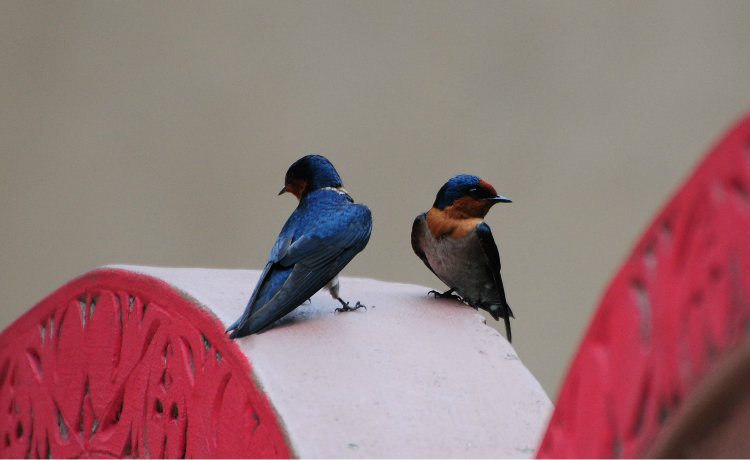
Next morning we were up and out bright and early exploring the local area before breakfast, though not seeing much it has to be said, a couple of familiar faces - Tree Sparrow and Grey Wagtail among the few bird species we saw along with more exciting Blue-eared Kingfisher and Pacific Swallows.


As we were about to have breakfast, a small group of Orangutans were seen across the river from the cottages which we were able to then watch while we ate our breakfast, with at least 3 animals present, though photos were a little more distant than we would have liked but a great start.


The rest of the day was spent ambling round the village, adding Orange-bellied Flowerpecker to the struggling bird list, and then in the late afternoon walked to the bat cave on the opposite side of the river.  As the temperate dropped slightly, birdlife became a bit more apparent, though their habit if staying high in trees doesn't make for easy viewing or in some cases, identification, though Asian Glossy Starling, Grey-breasted Spiderhunter, Grey-streaked Flycatcher, Yellow-vented Bulbul, Greater Coucal and a group of Blue-throated Bee-eaters were seen.  As we crossed the river, a group of very funky looking Thomas' Leaf Monkeys crashed through the trees, posing near us on the bridge before carrying on.


As we arrived at the bat cave, a much larger ape was crashing through the trees, this time a male Orangutan and although the light where it was wasn't the best, it was fantastic to see this majestic animal at much closer quarters as he looked down at us.


The bat cave itself was an interesting experience, being led over an assault course of rocks that health and safety in Britain would not allow in a million years, by a guide who showed us the fruit bats but photographing by torchlight really was a hit and miss affair.

Wednesday, 13 January 2016

Third time lucky

A long-staying Pallid Harrier, first seen heading south at Spurn Point in Yorkshire in October before taking up residence in Norfolk first at Warham Greens, then Snettisham has been seen almost daily since mid December at Flitcham, just east of Kings Lynn.  Just after Christmas I decided to go and have a look at the bird but missed it by a matter or minutes and then a visit last Friday also drew a blank, and so with a nice day forecast, I took this morning off for a third attempt.  Thankfully, despite missing the bird shortly after arrival at first light, after a couple of hour very cold wait, I was eventually rewarded with superb views of this bird as it flew low across the stubble field before attempting to catch one of the many finches feeding along a hedgerow.


Friday, 2 October 2015

Northern crest

Having enjoyed a couple of days R&R at Sebutal, just south of Lisbon, we headed north on a five hour drive to the Peneda-Geres National Park. On arrival, we were more than a bit alarmed to see the forest around the village of Peneda, where we were staying, on fire and being attended by a helicopter dousing the flames!


Thankfully by morning although the air still smelled of smoke, the fire had burnt itself out. Exploring further north around the villages of Lamas de Mouro and Castro Liboreiro, while Toni was busy photographing the local "wild" Gerrano horses, I wandered off and came across several very confiding and photogenic Firecrests.


Tuesday, 29 September 2015

High as a Kite

Having travelled fairly widely over the past ten or so years, I've seen quite a few birds on quite a few continents, and one bird the Black-shouldered Kite (a.k.a Black-winged or White-tailed Kite depending which country you are in) I have managed to see on four continents - Asia, Africa, North America and Australasia, yet despite several trips to southern Spain, not Europe!  This trip, to Portugal and Spain which has the eventual aim of seeing wolves has started with a relaxing couple of days in Sebutal, and so it was quite a surprise when on the first evening, a Black-shouldered Kite glided across the road just outside the hotel and promptly landed on a telegraph post and stayed for a couple of photos.

Saturday, 18 April 2015

Kruger's Big Five

Between 18th-28th March I visited Kruger Nation Park in South Africa with Toni Cross, and as with anybody who visits this fantastic park, seeing and photographing the so called "Big Five" was high on the agenda.  The Big Five consists of Lion, Leopard, Elephant, Buffalo and Rhino, so called originally by hunters who considered them the five most dangerous animals to hunt, and any thankfully, we managed to catch up with all of them.

Lion

We only saw Lions on four occasions, including a group walking down the road, feet away from the car, though the most memorable was a mating pair that we watched near the Letaba River, and surprisingly for such a sighting, we had them to ourselves, though a few cars had started arriving by the time we tore ourselves away.


Leopard

With their habit of doing what cats do best and spending their days fast asleep, Leopards can be difficult the see, but we were lucky with three sightings.


African Elephant

The most widespread and easy to see of the Big five, groups of Elephants were seen every day, often at very and sometimes uncomfortably, close range!


With their huge size and strength, you have to give Elephants a lot of respect. One bull near Sirheni we met walking down the road towards us was clearly in no mood to give us right of way. We had to reverse over a kilometer before a fork in the road allowed us to nip past him, but I think he just enjoyed intimidating us.


African Buffalo

Lone cantankerous males are considered on of the most dangerous animals you could want to meet, but thankfully there were no such problems with any of the animals we saw.


White Rhino

These were the last of the Big Five we saw and had three sightings, the best of a female with a young by a waterhole that was also being visited by a large herd of Elephants which caused a bit of a stand-off.


Tuesday, 17 March 2015

BTO Estonia Birding weekend

Over the weekend of 13-16th March, along with fellow BTO birders Sarah Harris, Nick Moran and John Marchant, I went to Estonia for a few days birding hoping for Steller's Eider, Owls, Woodpeckers and anything else we could find.

The birding crew left to right - Sarah, John, Nick and my good self (photo by John Marchant)

13th March

Armed with the "Gosney Guide"- 'Finding birds in Estonia', several internet trip reports and a lot of enthusiasm, we met up in the early hours at Stansted Airport and after a couple of hour flight, arrived in Estonia's capital city, Tallinn.  After picking up the hire car, we headed west towards Spithami, stopping near Nova where the first good bird of the trip, a Black Woodpecker was eventually seen briefly along with a couple of White-tailed Eagles, and more unusually, a flock of 31 Snow Buntings flying across a marsh.  With very little on the nearby sea other than a few distant Long-tailed Ducks, Red-breasted Mergansers and Goldeneye, we headed to Vonnu, a site Gosney suggests for woodpeckers.  We weren't to be disappointed, although we didn't see any of the hoped for White-backed there, we did have superb views of a flyover Black and a female Lesser Spotted Woodpecker.

flyover Black Woodpecker

female Lesser Spotted Woodpecker

The evening was spent searching the forest near Haapsalu in the hope of locating an owl of some sort but we only saw a group of Moose, which were nice in themselves, but no chance of photographs in the gloom of dusk.

14th March

After a very comfortable and cheap night in the Baltic Hotel Promenadii in Haapsalu, we were again up and out early to drive to Virtsu to catch the ferry across to the island of Saaremaa, making the 6.15am ferry with minutes to spare.  The crossing provided our first taste of the abundant seaducks in the area with well over 400 Long-tailed Ducks and fewer Velvet and Common Scoter, Goosander and a single female Tufted Duck.  As we headed across the island, we stopped to admire a small flock of trumpeting 'Northern' Bullfinch, a couple of Cranes and a Taiga Bean Goose on a flooded field and large flocks of Whooper Swan, Goldeneye, Smew along with more White-tailed Eagles and a ringtail Hen Harrier on the causeway that links Saaremaa with it's much smaller neighbour, Muhu.

Following a tip off, we we fortunate to locate a pair of Pygmy Owls on the west side of the island that gave superb prolonged views perched on the top of fir trees, much to the annoyance of various smaller birds that mobbed them, including some 'Northern' Bullfinches.


Pygmy Owl giving us the stare

'Northern' Bullfinch

Next stop was Uudepanga Bay on the northwest corner of Saaremaa, the winter home to large groups of wintering seaduck, most notably Steller's Eider.  The only problem is, Uudepanga Bay is huge and with no definite location of the ducks within the bay, we headed to the south side and after a short scan located the Steller's Eider very distantly in the north side of the bay!  Quickly hatching a plan, Sarah and I jumped back in the car whilst Nick and John walked along the beach around the bay and a while later we met up on the north side, with Nick and John covering the distance before we could drive it!  As we approached Nick and John, the 200+ strong Steller's flock was clearly visible offshore, much closer than previously and then Nick pointed out a single drake Steller's Eider just 30m away asleep on rocks, giving much better views than any of us had imagined getting of these birds.


Stunning views of a drake Steller's Eider

 The main Steller's Eider flock

This area is an amazing place, not just for the eider, but along the surrounding tracks we saw Black Woodpecker, Waxwings, Great Grey Shrikes, White-tailed Eagles and had a Pine Marten trot across the track.

Great Grey Shrike singing from telephone wires

sub adult White-tailed Eagle

Having had our fill of the eider, the rest of the day was spent driving back to the mainland, enjoying thousands of Long-tailed Ducks from the ferry and headed south of Parnu to the forests around Haademeeste.  Despite a failed search of the roads around the Nigula area for Ural Owl, with just a calling Tawny Owl for compensation it was still a day to last long in the memory.

15th March

Another of Gosney's key sites is the 'Magic Corner', a few miles east of Haademeeste.  Arriving shortly after dawn on another glorious sunny morning, woodpeckers were clearly in evidence, though a Hazel Grouse was heard only by Nick and Sarah.  Before we had walked far from the car, we located a couple of Grey-headed and Black Woodpeckers, the former giving superb prolonged views on some trees in a clearing, though I was only able to get poor phonescoped record shots.


Poor record shots of Grey-headed Woodpecker

Walking around the area, a pair of White-backed Woodpeckers were eventually located on the east side of the block along with more Grey-headed, Great Spotted and a Lesser Spotted Woodpecker, but no confirmed Three-toed, though Nick possibly saw one briefly chase off a Great Spot.  Whilst searching along the southernmost track where I had seen Hazelhen a couple of years ago (though this track has now been thinned of trees bordering the track and possibly making it less suitable and as a result no Hazelhen were seen), a group of about 7 Nutcrackers did give stunning views.

Nutcracker

These woods at night are clearly very popular with mammals of various descriptions, their footprints cover the muddy tracks, including Moose, Fox, Badger and some possible Wolf tracks, though they could just be dog footprints.  Next time I go there I'm going to take a trail camera to put out!!

Wolf, or perhaps dog footprints (next to a size 5 footprint for scale)

Badger prints

Just to the east of the Magic Corner lies Nigula Bog, and again the Gosney guide was spot on as Nick located a Middle Spotted Woodpecker by the reserve centre, our sixth woodpecker species of the day!

Middle Spotted Woodpecker - woodpecker number 6 of the day

After a fantastic morning around the Magic Corner and Nigula area, we went north to Soomaa National Park, an extensive area of forest and bogs where several bloggers had seen Ural Owl, our last chance of finding this enigmatic bird.  As dusk fell we drove slowly around the tracks and a mother and calf Moose stopped us in our tracks, pausing to look at us before heading into the trees.


Dusk soon became darkness as we carried on along the forest tracks, frantically waving spotlights in trees in the hope of catching a glimpse of an owl out hunting.  As we drove along one track which had nice wide edges, the first doubts began to set in and as we came upon a small tree, Sarah said "Why can't an owl just be in that tree there", and almost as soon as thew words had left her lips, Nick and Sarah who were on that side of the car saw a Ural Owl fly over the car, possibly coming out of that very same tree!!  As we stopped and searched in the hope the owl would reappear, a Ural Owl called from the other side of the block of trees we were by.  Fortunately, a small track ran off the one we were on and after a short drive I noticed the distinctive pale shape of a Ural Owl in the trees on the edge of the track which then sat there as spotlights shone on it.  We watched the bird for several minutes as it sat on small trees along the track, occasionally flying further down the track to another tree to look out for prey.

16th March

A last morning on the way to the airport was spent along forest tracks around Soometsa where we again saw several Black and single White-backed and Great Spotted Woodpeckers but despite much searching, couldn't find those elusive Three-toeds, oh well, maybe next time....


It was a fantastic few days with 87 bird species recorded between us, though we were very lucky with the weather with more woodpeckers seen than clouds! With cheap flights which only take a couple of hours from the UK and cheap accommodation and food, Estonia is definitely a country I highly recommend visiting and I will be going back to before too long!